Table of contents
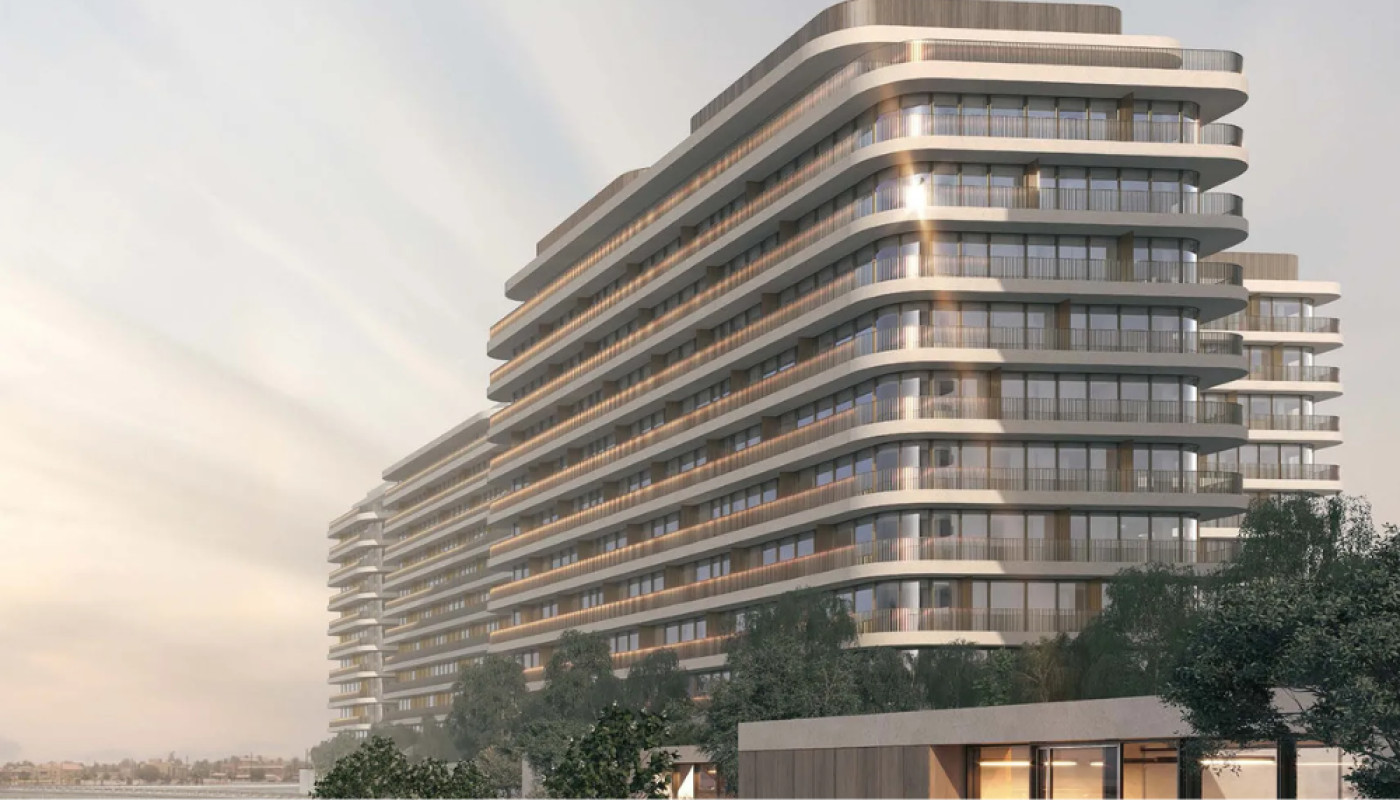
The most talked-about residential launch in Dubai this season is one that, technically, is not being launched. There has been no televised reveal, no full-page newspaper spread, no influencer-driven preview. Brokers describe a sales pavilion accessed by appointment, a project deck shared only after a signed non-disclosure agreement, and expressions of interest collected through a tightly held list. The address at the centre of this restraint is Eden House The Park, H&H Development’s new boutique residence in Al Wasl, and its quiet rollout has become the most discussed example yet of Dubai’s emerging “by-invitation” sales model.
A New Discretion at The Top of The Market
For most of the past two decades, Dubai’s residential launches have been events in the literal sense. Towers were introduced with stage shows, fireworks and renderings projected onto entire facades. The cultural memory of the city’s prime market is one of theatre, with off-plan units changing hands within hours of release and brokers’ phones lighting up well before the first model unit was ready.
That choreography still describes much of the market. But at the top end, something has shifted. Knight Frank’s recent Wealth Report has noted, with growing emphasis, that ultra-high-net-worth buyers in Dubai are increasingly behaving like their counterparts in London, Monaco and Hong Kong: privately, slowly and with a strong preference for information that has not been broadcast.
Property Finder’s research desk has tracked, in successive quarterly bulletins, a small but distinct category of prime launches that bypass the standard public release model altogether. The methodology is consistent across these projects. A short list of senior introducing brokers is briefed early. Initial allocations are offered to returning buyers and family offices. Public marketing, if it happens at all, is muted and arrives late.
The new Al Wasl project is one of the cleanest current examples of that approach.
The Mechanics of a By-Invitation Launch
The mechanics, observed across H&H’s earlier projects and corroborated by brokers active on the current one, follow a recognisable pattern. The developer briefs a small group of senior brokers, often the same ones who carried Eden House Dubai Hills, Casa Tessuto and Casa Canal through to completion. Each broker is given an introductory deck, but is asked to use it only with pre-qualified buyers.
Prospective buyers are invited to the sales pavilion in person. Floor plans, finishes and pricing are shared on site, not by email. A second visit, often with the buyer’s family or representative, is treated as standard before any expression of interest is taken. Negotiation, where it happens, is conducted directly between the broker, the developer’s sales team and the buyer’s advisers, with timelines measured in weeks rather than days.
For end-user buyers, who increasingly dominate the segment, the model has obvious appeal. It allows them to make a considered decision about a home, often involving relocation across continents, without the pressure of a public release timetable. For the developer, it allows tighter control of the resident mix, which in turn protects the long-term character of the building.
Why The Model Works In Al Wasl
The chosen location reinforces the choreography. Al Wasl, the stretch that runs between Jumeirah and Downtown along the Dubai Water Canal, is among the most domesticated luxury postcodes in the city. It is a neighbourhood of mature villas, established schools, low-key cafes and the families that have anchored the corridor for years. The pace of the neighbourhood is, by Dubai standards, unusually European.
JLL’s residential overview has repeatedly identified Al Wasl as one of the few central districts where new prime supply remains constrained, in part because plots rarely become available and in part because zoning resists the high-rise typology that defines much of the rest of the city. Bayut’s annual area report has tracked transaction prices in the corridor rising steadily through 2024 and 2025, with park-facing and canal-facing low-rise stock recording the strongest gains.
In a neighbourhood that already values discretion, a launch model that mirrors that discretion is less a marketing choice than a contextual one. The building’s frontage onto Safa Park, the city’s mature green anchor in this part of the corridor, completes the alignment.
Global Reference Points
The by-invitation playbook is not native to Dubai. It has been refined in other prime markets over several decades, and a handful of international precedents are useful in understanding what the current Al Wasl project is doing.
One Hyde Park, in London, became the canonical reference for a closed sales process at scale. Its initial allocations were managed through a tightly held broker list, with buyers asked to sign confidentiality agreements before viewing pricing. The result, two decades on, has been a building whose resident base is one of the most internationally diverse in central London, and whose resale market continues to operate largely off-market.
In New York, smaller boutique conversions in landmark buildings have followed a similar logic. The conversion of certain historic Madison Avenue and Park Avenue addresses, often quietly handled by a single brokerage and a discreet developer, has set the tone for the city’s most private prime launches. The pattern repeats across Manhattan, with the most desirable smaller buildings typically transacting through a closed broker network rather than public listings.
Closer to home, dxboffplan has documented, in successive market notes, a small group of Dubai launches that have followed a similarly closed model, with limited public marketing and a heavy reliance on returning buyer networks. The shared characteristic across these projects is unit scarcity, an architecturally distinctive product and a developer with the patience to allow the sales process to extend.
H&H’s canal-facing house sits comfortably within that international group.
The Investor Calculus Within The Discretion
While the editorial framing of the project leans heavily on lifestyle and discretion, the underlying investment mechanics are unusually straightforward. Property Finder’s market data has consistently shown that low-density, branded-developer stock in Al Wasl trades at a premium to broader market averages, with the strongest performance recorded for buildings that combine park or canal frontage with a credible operational layer.
Knight Frank’s wealth migration analysis has placed Dubai among the leading global destinations for ultra-high-net-worth relocations, with the UAE consistently appearing in the top tier of preferred jurisdictions. The Golden Visa programme, granting ten-year residency to property buyers above the AED 2 million threshold, has been a notable accelerator. The emirate’s 0 per cent personal income tax and 0 per cent capital gains tax on residential property remain among the more generous fiscal frameworks in any prime residential market globally.
For the buyer profile attracted to a by-invitation launch, the combination of fiscal clarity, residency optionality and freehold ownership is rarely the entry point of the conversation but is consistently among its closing factors.
Discretion Is Not Opacity
It is worth noting, in this context, what by-invitation does and does not mean. The model is not a private sale in the financial-instrument sense. The developer is a regulated entity. Pricing, while not publicly advertised, is shared transparently with serious buyers. Contracts are standard freehold instruments, registered with the Dubai Land Department, and protected by the emirate’s escrow and project completion framework.
The discretion, in other words, is editorial rather than legal. The project is real, the pricing is real, the regulatory framework is the same as for any other prime Dubai launch. What differs is the marketing register, and the choreography of how buyers are introduced to the building.
The Profile of the Early Buyers
Brokers active on the project describe an early buyer cohort that mirrors the cohort H&H has attracted to its previous projects. End-users dominate. Families with school-age children are well represented. International origins are skewed toward Europe, the GCC, India and a growing pool of relocating buyers from East Asia. Investors, in the short-term yield sense, are largely absent, partly because of the unit format, partly because of the pricing, and partly because of the slower sales tempo.
Knight Frank’s prime residential commentary has repeatedly noted that this kind of buyer mix tends to produce buildings with stronger long-term resale performance and lower turnover, because the resident base is bedded in rather than transient. Bayut’s resale data for H&H’s earlier schemes supports the pattern, with Eden House Dubai Hills and Casa Canal both recording lower-than-average resale velocity but stronger-than-average resale pricing.
The implication, for buyers considering the Al Wasl project, is structural. A building that is sold slowly is, almost by definition, a building that is then lived in slowly. The texture of life inside it differs in measurable ways from the texture of life inside a building that sold out in a weekend.
A Quiet Public Conversation
For all the deliberate restraint of the launch, the project is not invisible. Coverage has appeared, in measured form, in regional press and prime real estate media. Knight Frank, JLL, Bayut and Property Finder have referenced the project, by name and by category, in their successive market commentaries. The website is publicly accessible. The location is publicly known. What is held back, instead, is the high-friction marketing apparatus that has historically accompanied a Dubai launch.
That choice, more than any single design or amenity feature, is what brokers and analysts are pointing to when they describe Eden House The Park as a project that is moving the conversation forward. The building itself extends a format that H&H has been refining for years. The launch mechanics extend a model that the global prime market has used for decades but that Dubai has, until recently, used selectively.
What Comes Next
The likely arc of the project, based on H&H’s earlier schemes, is one of gradual buyer accumulation through the sales pavilion phase, a delivery period during which the resident community begins to settle, and an operational phase during which the wellness and hospitality teams take ownership of the day-to-day experience. The Al Wasl context, with its mature neighbourhood texture and its park frontage, is likely to reinforce rather than disrupt that arc.
Whether the by-invitation model becomes the new norm for Dubai’s prime segment, or remains the preserve of a small group of boutique developers, is a question the next few launch cycles will answer. For now, the model has found, in the Al Wasl project, an unusually clean expression. The address is confidential by intent. The conversation around it, perhaps inevitably, is not.
On the same subject